
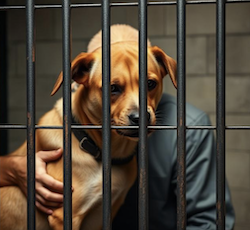
 Pennsylvania and many other states have rarely imposed imprisonment for the owner of a dog that fatally attacks someone. In fact, in PA, an online search reveals only one instance in the past ten years where a person served jail time for his dog mauling someone.
But times are changing. More prosecution is expected.
Let’s start with the most basic question: why has it taken so long for prosecutors to get “serious” about this?
Historic Lack of Real Accountability
Let’s use Pennsylvania as an example.
 For much of Pennsylvania’s history, dogs served a practical purpose. Pennsylvania was largely an agricultural state. Farms used canines to protect property and livestock. Thus, in PA and other similar states, the law afforded dog owners considerable latitude. This reflected the realities of a society heavily dependent upon agriculture.
Today, however, society looks much different.
Changing Economy
Pennsylvania is no longer an economy driven primarily by farming. Modern commerce increasingly depends on delivery services such as Amazon, FedEx, UPS, food delivery drivers, utility workers, healthcare providers making home visits, postal carriers, and countless others who must regularly enter private property as part of their jobs.
More People Working From Home
Following the pandemic of 2020, more people are living in the suburbs and working from home. Residential neighborhoods have become more densely populated, resulting in more interactions between dogs and the public.
Less Time To Monitor Dog’s For Issues
More-and-more households — having dogs and children packed into in the same household — also have two spouses working full time to make ends meet. This can frustrate the dog owner’s ability to monitor their pet, to notice the pet becoming more aggressive through neglect or otherwise.
The result?
Serious dog attacks—and fatal dog attacks—have become increasingly common across the country. In response, legislatures, prosecutors, and courts are imposing harsher penalties on dog owners who fail to properly control dangerous animals. The trend is not limited to Pennsylvania. States across the country, as well as other nations, are increasingly treating severe dog attacks as criminal conduct when owners knew or should have known their dogs posed a danger.
A Nationwide Shift Toward Criminal Accountability
As public awareness of severe dog attacks has increased, lawmakers have responded with legislation designed to hold irresponsible owners accountable.
Several states have recently enacted laws specifically targeting negligent dog ownership.
In Ohio, lawmakers passed “Avery’s Law” after a young girl suffered devastating injuries during a dog attack. The legislation significantly increases criminal penalties for owners who fail to control dangerous dogs. Animal control officials have noted that the law was intended to eliminate what many perceived as a “one free bite” system. Otherwise, owners may face minimal consequences until after a serious attack occurred. Under the new law, owners can face substantial fines, jail time, and the loss of their animals.
Similarly, Texas enacted “Lillian’s Law,” which imposes criminal liability on owners whose criminal negligence allows dangerous dogs to escape and seriously injure or kill another person. The law recognizes that repeated failures to secure known dangerous animals can create foreseeable and deadly risks to the public.
These legislative developments reflect a broader societal consensus: ownership of a dog carries significant responsibility, particularly when the animal has demonstrated aggressive tendencies.
Prosecutors Are Pursuing Serious Criminal Charges
Perhaps the clearest indication of this shift is the increasing willingness of prosecutors to file serious felony charges following fatal dog attacks.
Depending on the circumstances, dog owners have been charged with offenses including:
- Criminally negligent homicide;
- Involuntary manslaughter;
- Reckless homicide;
- Manslaughter; and
- In some cases, second-degree murder.
The most severe cases typically involve evidence that the owner knew the dog was dangerous but failed to take reasonable precautions to protect the public.
Prior Warnings Often Become Critical Evidence
One recurring theme in criminal prosecutions is the existence of prior warnings.
Many owners facing criminal charges had previously received complaints from neighbors, citations from animal control officers, reports of prior bites, or warnings that their dogs were escaping confinement. Prosecutors frequently rely upon this evidence to establish that the owner knew the animal posed a danger.
When an owner continues to ignore known risks, courts are increasingly willing to find criminal culpability when a serious attack eventually occurs.
Recent Examples Demonstrate the Trend
Florida: Manslaughter Charges Following Fatal Attack
In 2026, Florida authorities arrested a woman after her two dogs escaped from her property and fatally attacked a woman who was walking her own dog. Investigators alleged that the owner knew the dogs frequently escaped through defects in the fencing surrounding her property. Authorities also reported that the dogs had previously bitten another individual and had become increasingly aggressive.
Based upon those facts, prosecutors filed manslaughter charges against the owner, alleging that her failure to properly secure the animals resulted in a preventable death.
Texas: Lillian’s Law Leads to Felony Arrests
In 2025, Texas authorities arrested two dog owners after seven dogs allegedly mauled and killed an 88-year-old woman.
Investigators determined that at least one of the dogs involved had a documented history of prior aggressive behavior. Authorities further alleged that the owners had previously been notified that one of the animals qualified as a dangerous dog. Based upon those facts, prosecutors charged the owners under Lillian’s Law with felony offenses arising from the fatal attack.
Ohio: Lengthy Prison Sentence After Fatal Mauling
In another highly publicized case, an Ohio couple received a fourteen-year prison sentence after their dogs escaped confinement and fatally attacked a neighbor. The convictions included involuntary manslaughter (carrying jail time) and violations of dangerous dog confinement laws.
California: Murder Convictions Upheld
California courts have gone even further. In several cases, courts have upheld second-degree murder convictions against dog owners whose animals killed people after repeated incidents of aggression. Courts reasoned that owners who knew their dogs routinely escaped, attacked people, or displayed dangerous behavior could be found to have acted with “implied malice” when they failed to prevent future attacks.
United Kingdom: Routine Criminal Prosecution
The trend is not limited to the United States. Courts throughout the United Kingdom regularly impose criminal penalties, including incarceration, for owners whose dogs are deemed dangerously out of control. The penalties become even more severe when restricted or prohibited breeds are involved or when owners disregard previous warnings from authorities.
What This Means for Pennsylvania Dog Owners
Pennsylvania law already imposes substantial civil liability upon owners whose dogs cause injury. And Pennsylvania’s criminal laws include new penalties for the owner of a dog that attacks.
As legislatures and prosecutors across the country continue to strengthen penalties, dog owners should recognize that serious attacks can result in consequences far beyond a civil lawsuit. Where an owner knows a dog has aggressive tendencies, has previously bitten someone, has escaped confinement, or has generated repeated complaints, failing to take appropriate precautions can expose the owner to both civil and criminal liability.
While a minor, isolated bite is unlikely to result in jail time, the modern trend is unmistakable: when owners knowingly ignore warning signs and a preventable tragedy occurs, prosecutors are increasingly willing to seek jail time. The days of treating severe dog attacks as merely “accidents” are rapidly disappearing.
As society becomes more densely populated and more workers routinely enter residential property to perform essential services, courts and legislatures are placing greater emphasis on public safety and responsible dog ownership.
Get a Free Consultation!
We offer a free, no obligation consultation about any canine attack in the Commonwealth of Pennsylvania.
412.400.5476