
🧬 Using Doggie DNA to Identify the Animal Post-Attack
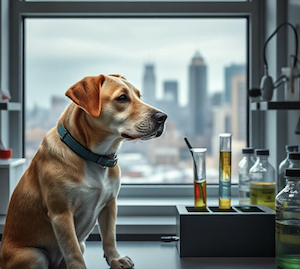
Most often, identifying the aggressive pet is easy, especially if the pet’s owner is present for and acknowledges the dog bite. Or, there may be other corroborating evidence to identify the canine, short of obtaining the animal’s DNA for comparison testing.
So you might think: “I was there. I can identify the canine whose jaws clamped down on me. Isn’t that always enough?”
But here are two common examples where DNA evidence would be helpful to prove a civil claim for damages:
Example 1:
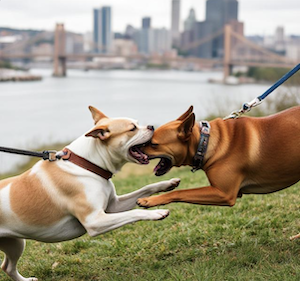
Let’s say you’re walking your gentle pet on the sidewalk on a leash and another person comes walking from the opposite direction — also with a canine on a leash. The animals start fighting. You’re injured while breaking up the attack. You suffer bites to your hands and arms. The other pet’s owner blames your pet’s teeth for your injuries, claiming his pet never touched you. Unfortunately, the bite size and shape could have come from either pet.
Example 2:
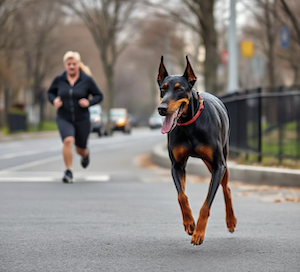
Let’s say your neighbor’s doberman pinscher growls at you every day for no reason, from behind a fence, as you jog by. One day it escapes and attacks you on the street while you’re jogging, then it runs off, down the street, not necessarily running back to your neighbor’s yard.
You’re bleeding badly and so you drive yourself to a hospital before the dog returns home. Plus, you can identify the dog by its red collar, so why stick around? The next day, your neighbor denies your claim: “My dog didn’t bite you. Do you have pictures? Lots of dogs have a ‘red collar.'”
Obtaining a Dog’s Saliva For DNA Is Nothing New
 For years, animal ranchers have successfully swabbed injuries to livestock to identify the attacking canine. Yet after a bite, most people focus solely on wound care, reporting, and maybe taking photos of injuries. All are great ideas. The BBC has written about this. But very few people—even professionals—think to swab and preserve saliva from the wound.
Why This Can Matter
- DNA swabs from the bite site (or clothing) can be used to identify the dog if the owner flees or the dog is unknown.
- It can corroborate bite claims if the dog’s involvement is disputed (especially in cases involving multiple dogs).
- You can match DNA from saliva to shelter or vet records even weeks later, especially in criminal or civil investigations.
Who Will Obtain and Test the DNA?
Don’t expect law enforcement to do this, unless there are fatal (or near fatal) injuries involved. Police often lack resources to do DNA testing to identify a human assailant who causes injury, let alone a canine driven event. Plus a good defense lawyer can attack DNA evidence in court, unless the police follow strict protocols for evidence preservation, creating a headache for law enforcement.
The rules are more forgiving in civil cases, however. So relative to the civil case, be prepared to obtain and study the evidence yourself.
The Five Best DNA Tests as Reviewed
In your case, if law enforcement lacks the resources and/or interest to test the saliva for the pet’s DNA, here is a link to a review of five different DNA tests for pet-related matters.
How to Obtain a Pet’s DNA from a Wound it Created
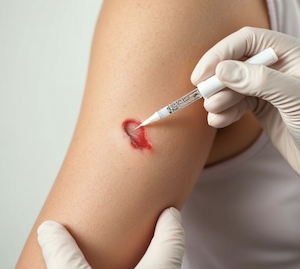 Before cleaning the wound to skin (or tear of clothing), gently swab the bitten area or any wet clothing with a sterile cotton swab. Then, let the swab air dry (don’t seal it while wet). Place it in a paper envelope (not plastic) and label it with the date/time.Lastly, store it in a cool, dry place and give it to your lab or authorities (if they’re interested in pursuing the matter).
This method is sometimes used in forensic animal attacks, but very few people outside of specialized vet pathologists, animal control officers, or forensic teams even know it’s viable.
Numerous Examples of DNA Used in Court
While this issue of doggie DNA rarely comes up in civil cases for money following a bite, doggie DNA testing is nothing new in court.
1. Texas—Augillard v. Madura
In Texas, a civil dispute over dog ownership was settled using DNA testing, as reported by Michigan State University. A DNA test confirmed that the canine in one party’s possession was genetically identical to the pet in question, allowing the court to conclude it belonged to the plaintiff. The court recognized this DNA evidence as sufficient proof of ownership—despite the Defendant’s attempts to undermine it.
2. Houston, Texas—“Little Man” the Yorkshire Terrier
This was an undisputed criminal/civil situation involving a Yorkie named Little Man, as reported by Fox Houston. The owners lost the dog, it turned up with another family, and the court ordered DNA testing. The results confirmed ownership based on familial DNA from the dog’s parents and sister. The court returned the dog to the rightful family.
3. Disputed Ownership
Two men claimed the same Labrador dog in India. There, law enforcement facilitated a DNA test in Hyderabad, which confirmed one claimant as the owner. After that, the pet was returned to the verified owner by law enforcement.
⚖️ In Conclusion
- In hit-and-run dog bite cases, victims often struggle to identify the dog or owner. DNA is admissible evidence in many jurisdictions to prove involvement.
- Civil suits may hinge on proving which dog caused the injury—especially if there are conflicting accounts or multiple dogs on-site.
Most dog experts know to clean the wound, report the bite, watch for signs of infection, and ensure rabies status. But this DNA preservation trick is a quiet but powerful tool, especially in disputes, unknown dog attacks, or cases with legal consequences.
Let’s Get Started!
Contact our professionals for free to learn more about your rights to compensation following an injury.
412.400.5476