
Evidence is Needed to Prove a Dangerous Dog Claim or Defense
 “Talk is cheap,” as we know. In truth, anyone can point the finger and say anything — at any time — about anyone. It’s “free,” as in “free speech.” In fact, it’s (practically) free to make your allegations in a civil lawsuit. There, the filing fee ranges from $80 (small claims court) to $150. And, in turn, the person blamed (or sued) for something may, in turn, blame the party making accusations. “No I’m not, you are!” – is the playground defense.
But we also know, “words have consequences.” And in civil litigation, every allegation carries the “burden of proof.” In other words, in court, it’s not enough to say it, you also need to prove it by a preponderance of evidence, meaning, a “more likely than” not standard. The same goes for playground defense.
“I”m not responsible for this attack,” the Defendant will say to the Plaintiff, “You are!”
How does a court evaluate the allegations?
Enter the Parties in Coffin v. Carbon County Animal Shelter
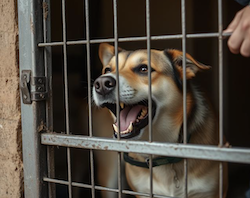 In Coffin v. Carbon County Shelter, No. 1516 C.D. 2023 (Pa. Cmwlth. July 22, 2025), a dog attacked the Plaintiff at an animal shelter. The Plaintiff suffered bites to her leg and a fall that resulted in two broken ankles, with one requiring surgery. At trial, the Defendant asked that the court instruct the jury about the Plaintiff’s own comparative negligence. The Defendant was effectively blaming Plaintiff for “getting too close” to the dog.
“No I’m not negligent, you are!”
 The court granted the Defendant’s request for a comparative negligence instruction. This instruction implied to the jury that the Plaintiff must have been comparatively negligent. Otherwise, why would a judge be telling us, the jury, about comparative negligence? The jury awarded the Plaintiff $40,000 but also attributed 50% comparative negligence to her.
On appeal, Commonwealth Court determined that the trial court had erred, by giving the jury a comparative negligence instruction. The appellate court found no evidence whatsoever that the Plaintiff had been negligent, specifically noting that she was not negligent in failing to distance herself from a leashed dog showing no prior signs of danger.
The appellate court also ruled that “getting close” to a dog — without more — isn’t enough to show that the plaintiff had been comparatively negligent. In other words, the Defendant needed more to meet its burden of proof — to show that the Plaintiff’s own error contributed to her injuries.
So the appellate court sent the case back down for a new trial.
The Plaintiff Must Also Prove Her Case
The Plaintiff must prove — not merely allege — that the Defendant violated some duty of care to the Plaintiff, which caused Plaintiff’s injuries. See Miller v. Hurst, 302 Pa. Super. 235 (1982). It’s up to the jury to evaluate the evidence, but there has to be at least some evidence of negligence for the case to go to a jury. Deardorff v. Burger, 414 Pa. Super. 45 (1992). Otherwise, a judge can dismiss the case before, during and after a trial. Deardorff v. Burger, 414 Pa. Super. 45 (1992).
In Summary
It’s called the “burden” of proof for a reason. Whether you’re the plaintiff (trying to prove liability for a dog bite) or you’re the Defendant (asserting an affirmative defense of comparative negligence), you need evidence.
To assess your legal options, contact us for a free consultation!
412.400.5476